How to jig for rockfish and lingcod
A step by step guide on how to jig for rockfish and lingcod. For a more in depth tutorial, we offer all inclusive rockfish fishing charters.
Rod and Reel
Rod Selection
For most rockfish and lingcod fishing, a rod rated between 7-8.5 feet and medium-heavy is ideal. If you are fishing from shore, than a longer rod would be more suitable for farther casting distance. The medium-heavy rating provides the flexibility for any smaller rockfish, but with the power for any potential lingcod. Many anglers prefer rods rated for 15–30 lb line to handle heavy sinkers and larger fish.
The Daiwa Saltiga Jigging rod is an excellent choice for handling rockfish and larger lingcod where it shines most while jigging.
Reel Selection
For ocean fishing for rockfish and lingcod, a 4000–6000 size spinning reel or a conventional / jigging reel provides good line capacity and the power needed to reel in these big fish.
The Penn Fierce III Spinning reel or the Sealine conventional jigging reel are both excellent choices for catching rockfish, lingcod and any unexpected catches.
Line Recommendations
Braided line is the preferred choice because it offers minimal stretch, excellent sensitivity and more strength while being thinner than monofilament.
A braided mainline between 30-60 lb is typically used.
A monofilament or fluorocarbon leader of around 20-30 lb is typically used. Fluorocarbon is preferred, as it sinks better and is more invisible underwater.
Necessary Tackle
Barrel swivels
Jig heads
Jig hooks (2/0 - 5/0)
Soft plastic swimbaits
Paddle tails
Grubs
Fluorocarbon leader (20-30 lb)
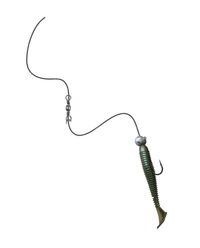
How to rig and fish it
A simple bottom fishing rig is one of the most effective ways to target both rockfish and lingcod. The goal is to keep your bait or lure close to the bottom where these species spend most of their time.
Step 1: Tie on a Swivel
Tie a barrel swivel onto your mainline. This reduces line twist and prevents tangles.
Step 2: Add a Leader
Tie 20–40 inches of your fluorocarbon leader to the swivel. A longer leader has less chance of spooking fish, as it is invisible compared to the braided mainline.
Step 3: Add a jig head
Tie on a lead-head jig rigged with a soft plastic swimbait.
You are now ready to fish.
Fishing the Rig
Cast your rig and continue to let line out until it reaches the bottom. Once your bait reaches the bottom, slowly lift and lower the rod tip (this is jigging). This attracts the attention of any nearby rockfish that there is an injured fish nearby. Rockfish often produce quick taps, while lingcod typically strike aggressively and pull hard toward rocks and other structure. After jigging about 5-8 times, open your bail and let some line out until you contact bottom again. Constant jigging brings your lure too high into the water column and out of the strike zone, as rockfish and lingcod dwell on the ocean floor.
When a fish bites, maintain steady pressure and begin reeling immediately to prevent it from returning to the rocks.